Apple Business Launch: New All-in-One Platform for U.S. SMEs
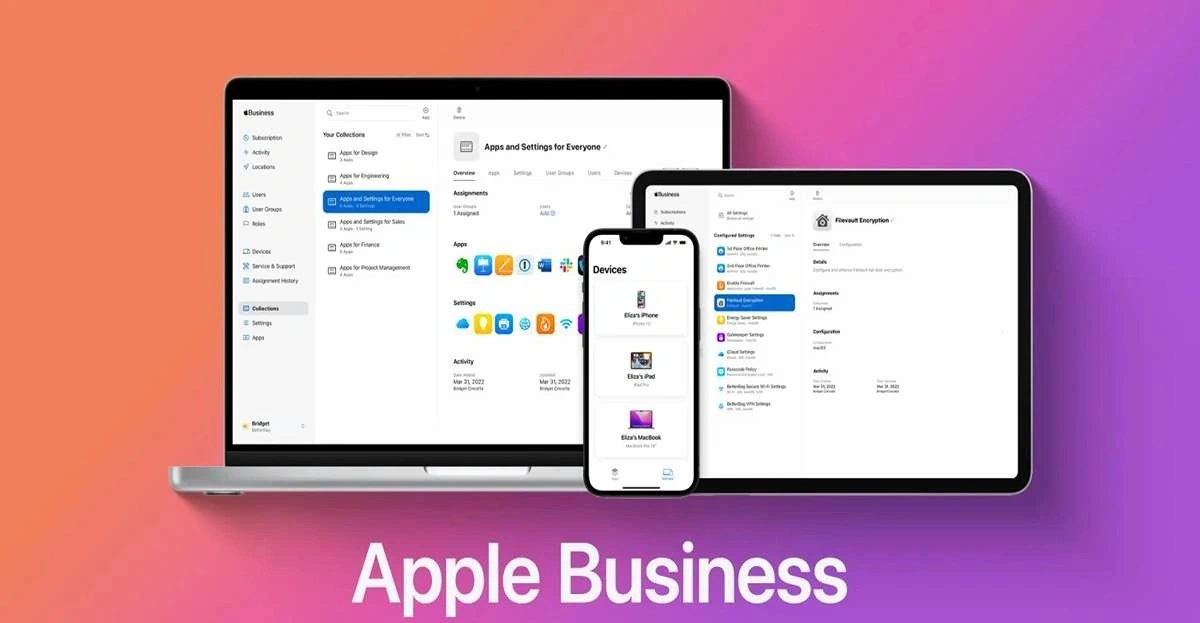
Apple officially debuts 'Apple Business,' a centralized platform for device management, professional email, and a new ad network integrated directly into Apple Maps.
Small business owners in the United States have never had a shortage of tools to manage their operations. What they've had a shortage of is tools that talk to each other. Apple is betting that's a problem it can finally solve.Today, the company officially unveiled Apple Business, a unified platform targeting small and medium-sized enterprises that pulls together device management, professional communication, and local advertising under one roof, tied to the same Apple ID infrastructure that already runs in millions of pockets and on millions of desks. At its core, Apple Business is three things at once.The first is a rebuilt version of Apple Business Manager, the existing mobile device management tool that IT departments have used for years to enroll iPhones, iPads, and Macs. The new platform doesn't just update that service — it redesigns the interface from scratch and makes it accessible to companies that don't have a dedicated IT team.A restaurant owner with twelve employees and a mixed fleet of devices can now set up enrollment policies, push software remotely, and revoke access when someone leaves, all without touching a Terminal window or calling a consultant. The second piece is Apple Mail for Business, a hosted professional email product that competes directly with Google Workspace and Microsoft 365. The service includes custom domain support, shared team inboxes, and calendar integration baked into the Apple ecosystem.Apple is positioning this not as a feature add-on but as the communications layer that anchors the whole platform.Companies that move their email to Apple Business keep everything — contacts, scheduling, shared documents — inside one set of applications. For teams that already run almost entirely on Apple hardware, the pitch is essentially that they've been paying for a third-party email provider for years when they didn't have to. The third piece is the most unexpected: Apple Maps Ads.Merchants and service providers using Apple Business can now purchase placement in Apple Maps search results, local discovery cards, and the 'Nearby' section that surfaces when iPhone users open the app without a destination in mind.Apple Maps has quietly grown its accuracy and user base over the past several years, and the company has not previously sold advertising inside it.That changes now.The ads are sold on a cost-per-click basis and are limited to businesses with a verified Apple Business profile, which is Apple's way of ensuring that what shows up in Maps results is a real, operating establishment rather than a keyword farm. The advertising component carries the most commercial weight in the long run.Apple Maps processes hundreds of millions of searches every month in the United States alone, and local intent searches — 'pizza near me,' 'plumber open now,' 'coffee shop downtown' — have always been the most conversion-rich category in digital advertising.Google has made enormous revenue from exactly this kind of inventory for more than a decade.Apple has watched that happen from a distance while running a platform that arguably has better location data in many metro areas.Apple Maps Ads is the company's first direct move into that space at the small business level. Privacy is the differentiating claim Apple leads with.Unlike competing ad networks, Apple says its Maps Ads do not build behavioral profiles or share user data with advertisers. Targeting is based on location relevance and search context, not on browsing history or purchase patterns pulled from third-party sources. Whether that matters to a business owner trying to bring foot traffic through the door is debatable, but it matters a great deal to the Apple brand story and to the regulatory environment the company now operates in. The full Apple Business platform launches on a tiered pricing structure. A free tier covers device enrollment for up to five users.Paid plans that include hosted email and ad credits start at a monthly rate that positions Apple below the comparable Microsoft 365 Business Basic offering, at least on paper.The pricing will be tested quickly; enterprise software buyers rarely take list price at face value, and the competition has years of inertia on their side. What Apple has that the competition doesn't is the hardware install base. Every iPhone, Mac, and iPad already sold is a potential anchor point for this platform. The bet isn't that Apple Business is better than every tool it replaces on a feature-by-feature basis. The bet is that deep integration across the stack is worth more to a small business owner than marginal improvements in any individual application. The next several quarters will tell whether that argument lands.