Federal Court Blocks Alabama Congressional Map Over Racial Bias Claims
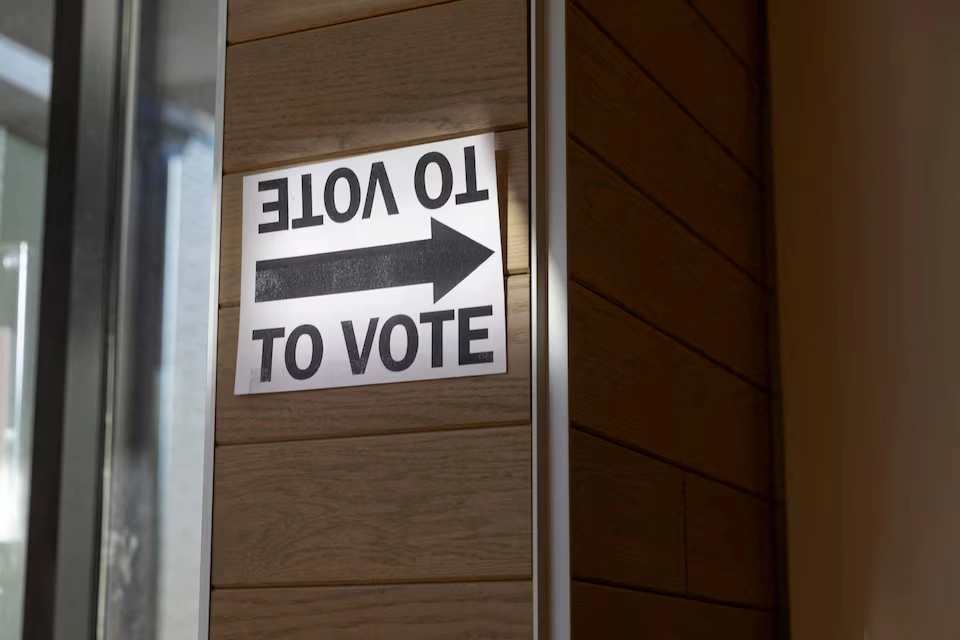
A federal court has stopped Alabama from using a Republican-backed congressional map after ruling it discriminated against Black voters ahead of the 2026 elections.
A federal three-judge panel has blocked Alabama from using its Republican-drawn 2023 congressional map in this year's midterm elections, ruling Tuesday that the legislatively enacted districts intentionally discriminated against Black voters in violation of the 14th Amendment to the Constitution a decision that immediately set the stage for another confrontation before the United States Supreme Court.The 102-page order, issued by Circuit Judge Stanley Marcus and District Judges Anna Manasco and Terry Moorer, directed Secretary of State Wes Allen to administer all remaining 2026 election proceedings under a special master's race-blind remedial map that established two majority-Black opportunity districts across Alabama's seven-seat congressional delegation. That court-drawn map had already governed the state's 2024 elections.At the center of the dispute is Alabama's long-running refusal to draw a second district in which Black residents who account for roughly 27 percent of the state's population hold meaningful electoral influence.The 2023 map passed by the Republican-controlled legislature retained only one majority-Black congressional district, a configuration the court said could not be reconciled with the constitutional guarantees the 14th Amendment was ratified to protect.We cannot see our way clear to requiring Alabamians to cast their votes in the 2026 elections under a districting plan tainted by intentional race-based discrimination, the three-judge panel wrote in its order. The court found that Alabama's legislature had deliberately employed the precise mechanisms known to dilute Black voting power in the state's Black Belt and Gulf Coast communities, ruling that the choices were neither accidental nor politically neutral.The ruling arrived in the aftermath of the Supreme Court's recent decision in Louisiana v. Callais, which substantially narrowed the enforcement scope of the Voting Rights Act of 1965 a ruling that had emboldened Alabama and several other Republican-led Southern states to attempt to reinstate maps that federal courts had previously struck down.Alabama's legislature moved swiftly after that decision to reimpose the 2023 plan, even as absentee ballots under the old map were already in circulation, generating documented confusion among voters statewide.The three-judge panel was unequivocal, however, that the Callais decision offered no legal shelter for intentional racial discrimination under the 14th Amendment.Alabama Attorney General Steve Marshall announced within hours that the state would immediately appeal to the Supreme Court.Marshall has maintained throughout the protracted litigation that the state's maps reflect traditional redistricting criteria and represent a lawful exercise of the legislature's authority.Republican Congressman Barry Moore, a Trump-backed incumbent whose seat would be directly affected by the ruling, dismissed the decision as judicial overreach, publicly posting that voters not federal judges should determine who represents them in Congress.Governor Kay Ivey, who had already scheduled a special congressional primary for August 11 to accommodate four districts that would have been redrawn under the now-blocked 2023 plan, faces fresh logistical uncertainty as election officials await word from the Supreme Court on whether an emergency stay will freeze the lower court's order before that date.House Democratic Leader Hakeem Jeffries framed the ruling in pointed electoral terms, accusing Republicans and the Trump administration of engineering a mid-cycle map revision to capture additional House seats ahead of November.Jeffries called on the Supreme Court to uphold the Constitution rather than lend its authority to what he described as a transparent power play designed to manipulate the composition of the next Congress.The Alabama case does not stand alone. Florida, Mississippi, South Carolina, and Tennessee have each moved to implement newly redrawn maps that critics argue follow the same dilutive architecture the Alabama court found unconstitutional this week. Legal analysts tracking redistricting litigation across the South said the Supreme Court's response to Alabama's emergency application will almost certainly determine how far other states may go in restructuring minority electoral districts before November ballots are cast.For voting rights litigants, Tuesday's ruling offered measured reassurance that the 14th Amendment remains an actionable enforcement tool even as the Voting Rights Act's reach contracts under the current court. The state is expected to file its emergency application with the Supreme Court within days, placing the outcome of Alabama's congressional elections and potentially the balance of the House itself before the nine justices once more.The panel also set a schedule for further proceedings ahead of the 2028 redistricting cycle, a signal that, however the Supreme Court resolves the immediate emergency, the underlying litigation remains far from its end.