UN Climate Report Warns Next Five Years Could Break Heat Records
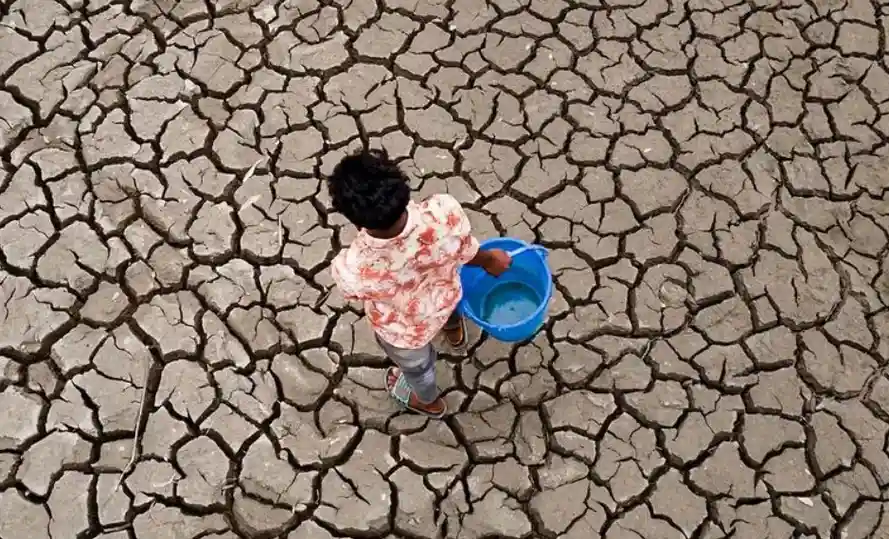
A new WMO report projects a 75% chance that average global temperatures between 2026 and 2030 will exceed the 1.5°C Paris threshold, with 2027 tipped as the next record-breaking year.
The numbers arrived without drama, but what they describe is anything but routine. The World Meteorological Organization, working alongside the United Kingdom's Meteorological Office, published its latest near-term climate outlook on May 28, and the headline figure is one that atmospheric scientists have been watching approach for years. There is now a 75 percent chance that the average global temperature across the five-year window from 2026 to 2030 will exceed 1.5 degrees Celsius above pre-industrial levels — the benchmark that 196 nations agreed, under the 2015 Paris Agreement, to treat as the upper boundary of manageable warming.The report, drawn from roughly 200 computer simulations running across 13 climate models developed by research institutions on four continents, goes further than that single probability. It places the likelihood that at least one individual year between now and 2030 will temporarily breach the 1.5-degree mark at 91 percent. It gives an 86 percent probability that at least one of those years will surpass 2024 as the hottest year in recorded history. On current trajectories, the WMO expects every year through 2030 to land between 1.3 and 1.9 degrees Celsius above the 1850–1900 baseline that scientists use as a proxy for the pre-industrial climate.Leon Hermanson, the report's lead author and a climate scientist at the Met Office, pointed to a specific mechanism behind the higher end of those projections. There is an El Niño predicted for the end of 2026, he said, which increases the chances of the following year, 2027, becoming the next record-breaking year. El Niño, the periodic warming of surface waters across the central and eastern tropical Pacific, does not cause long-term climate change but acts as an amplifier on top of the background warming already locked in by decades of fossil fuel combustion. The last strong El Niño, which coincided with 2023 and ran into 2024, helped push that year into the record books. A new event arriving on top of an already-warmer baseline could push 2027 further still.Melissa Seabrook, a climate scientist at the UK Met Office and a co-author of the report, was careful to resist the most reductive reading of the Paris threshold. It is not kind of a cliff edge that we are going to fall off, she said. Every 0.1 of a degree has more and more severe impact. The distinction matters because the 1.5-degree limit in the Paris Agreement refers to a sustained average over two decades, not a single calendar year. Crossing it briefly in 2027 or 2028 would not constitute a formal breach of the accord. What it would constitute is a signal — one that is growing harder to dismiss — that the window for remaining within that boundary over the long term is closing faster than many governments have publicly acknowledged.The report's regional projections are where the abstract probabilities acquire physical weight. The Arctic, which has already been warming at roughly three and a half times the global average rate due to a feedback loop in which melting ice reduces the reflectivity of the surface, is forecast to experience winters between 2026 and 2030 that average 2.8 degrees Celsius warmer than the 1991–2020 normal. Arctic winters between 2020 and 2025 were already running 1.2 degrees above that same baseline. The acceleration implied by those two numbers is one that sea-ice researchers have described as consistent with scenarios they had previously associated with a later decade.At the other end of the planet's moisture spectrum, the Amazon basin faces a different kind of threat. The WMO report projects warmer and unusually dry conditions across the region through 2030, raising the probability of large-scale wildfires at a time when the Amazon's function as a carbon sink is already under stress from deforestation and earlier droughts. The concern is not merely ecological. The Amazon draws moisture from the Atlantic, cycles it through the canopy, and releases it as rainfall that feeds agriculture across South America. A sustained drying trend does not stay inside the forest.Shifts in precipitation patterns extend beyond the tropics. The report forecasts above-normal rainfall for the Sahel, northern Europe, Alaska, and Siberia between 2026 and 2030 — changes that are consistent with a warmer atmosphere's increased capacity to hold and redistribute moisture — while drier conditions are expected across the Amazon region and parts of the subtropics. Africa's Sahel, which has experienced severe drought episodes in recent decades, faces an increased flood risk under the new projections, a reversal that will test infrastructure and agricultural systems already strained by years of erratic conditions.Friederike Otto, a climate scientist at Imperial College London who was not involved in producing the report, noted that sustained warming above 1.5 degrees would push heat waves, droughts, and heavy rainfall events beyond anything that currently shapes building codes, crop insurance models, or emergency response planning in most countries. The communities most exposed to those extremes are, as a rule, the ones that have contributed least to the emissions driving them.The methodological foundation of the WMO report distinguishes it from simpler projections. Rather than relying on a single modelling centre, it synthesises output from 13 institutions, including the Barcelona Supercomputing Centre, the Canadian Centre for Climate Modelling and Analysis, Deutscher Wetterdienst, and the Met Office itself. Hindcast testing — running the models against periods where the outcome is already known — shows high skill in predicting annually averaged global mean near-surface temperature, giving the research community and policymakers a higher degree of confidence in the five-year outlook than would be possible from any single model run.What the report cannot do is resolve the policy question that its numbers implicitly frame. The science of what is coming has never been clearer. Whether the response — in legislatures, boardrooms, and the bilateral meetings where emissions commitments are quietly revised up or down — will bear any relationship to the scale of the problem is a question that no climate model is equipped to answer.