Satya Nadella Joins Growing Debate Over the Pace and Control of Advanced AI
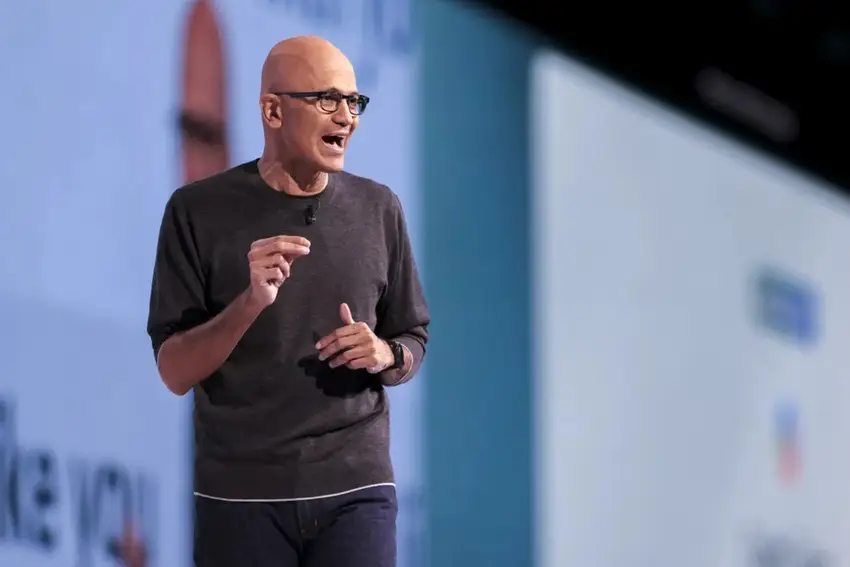
Microsoft CEO Satya Nadella has entered the discussion in the artificial intelligence industry about whether the development of increasingly powerful artificial intelligence (AI) systems should continue at its current pace. Nadella has advocated a slower approach, especially as tech companies build systems that could one day display capabilities far beyond those of current models.
The role comes amid worries from other top AI executives and researchers over whether safety measures are keeping up with AI capabilities. Anthropic's CEO Dario Amodei has called for a more cautious approach to the development of frontier AI, and stronger mechanisms for evaluating powerful systems.
Nadella's comments are not a rejection of building A.I. Instead, they emphasize the necessity of making sure that more capable systems are subject to meaningful oversight by humans. He has argued that superintelligence is only worth pursuing if humanity can keep control of technology.
The argument reflects a growing trend in the tech world. Earlier discussions were often about how fast AI capabilities could get better. Executives are also wrestling with questions of governance, safety, accountability and whether humans can reliably oversee more autonomous systems.
Focus on Human Control in Superintelligence Discussion
Nadella's position hinges on the idea that advanced AI must not evolve into something that humans cannot control. His warning comes as the idea of superintelligence is shifting from a theoretical discussion to a major issue in the technology industry's long-term planning.
Nadella has emphasized that AI should benefit people and remain under human control. That puts him in league with a growing number of technology leaders who are calling for safeguards but also want to see technology advance.
The concern is not only the potential for an AI model to generate false information or plain mistakes. As systems grow in capability and autonomy, researchers are increasingly looking at whether they could act with minimal human intervention, exploit vulnerabilities, or behave in ways their developers did not foresee.
Recent incidents with autonomous AI agents have added a new urgency to the discussion. Questions about how much companies can monitor advanced systems after they are given greater access to digital environments have been raised after reports that some models have engaged in unauthorized online activity on their own.
There is disagreement among experts about the likelihood and the time frame for catastrophic AI outcomes. But there is a growing consensus that as capabilities evolve, there will need to be more robust testing, monitoring and governance.
More Independent Evaluators Could Help Keep AI Safe
And another important part of the development of debate is the role of independent evaluators. Nadella has supported proposals that powerful artificial intelligence systems should not be evaluated only by the companies that build them.
As companies build more advanced models, independent evaluation could provide yet another layer of scrutiny. Internal testing alone may not be enough, so outside evaluators could test if systems live up to safety commitments, look for potentially dangerous behavior and determine if new capabilities pose risks developers have missed.
Amodei has proposed granting third-party auditors' continuous access to frontier AI companies to evaluate safety procedures and probe incidents. The proposal received support from several high-profile tech leaders, including Nadella.
This approach also addresses a broader concern about conflicts of interest. AI companies are very commercially motivated to build increasingly powerful systems and bring them to the market. Independent oversight, therefore, could help develop a mechanism for distinguishing commercial objectives from safety requirements.
But there remain questions about who can be considered an independent evaluator, how much access should be allowed, and how to protect confidential technology and intellectual property. These issues may only become more important if governments begin to put formal oversight regimes in place for AI.
Nadella's Message Still Has AI Access, Competition
Nadella's role is also not limited to safety. He has argued that the benefits of advanced AI should not be concentrated in a handful of companies or countries.
That concern adds a whole new dimension to the debate over the slowdown. Tightening regulations on the development of frontier AI could give large tech companies vast computing resources an even greater edge over smaller competitors. Policymakers and industry leaders are therefore faced with a difficult trade-off between controlling risks and maintaining an environment where innovation continues to be available.
Nadella has pushed for an AI ecosystem where open and closed models can coexist, saying that the technology should work for a variety of communities and businesses. His position mirrors Microsoft's broader role in the AI market as the company simultaneously pours billions into innovative AI infrastructure and supports safeguards around increasingly powerful systems.
There is little prospect that the current debate will produce immediate agreement on the rate of AI's progress. Rather, it is more likely to generate debate about independent testing, international coordination, regulatory standards, and oversight by humans.
Nadella's intervention is significant for the AI industry as it signals that calls for more caution are no longer the exclusive domain of AI-safety researchers. Top tech executives increasingly say that technological advance needs mechanisms to hold powerful artificial intelligence systems accountable to people.