US Insurers Pledge Continued Coverage for Childhood Vaccines Through 2027
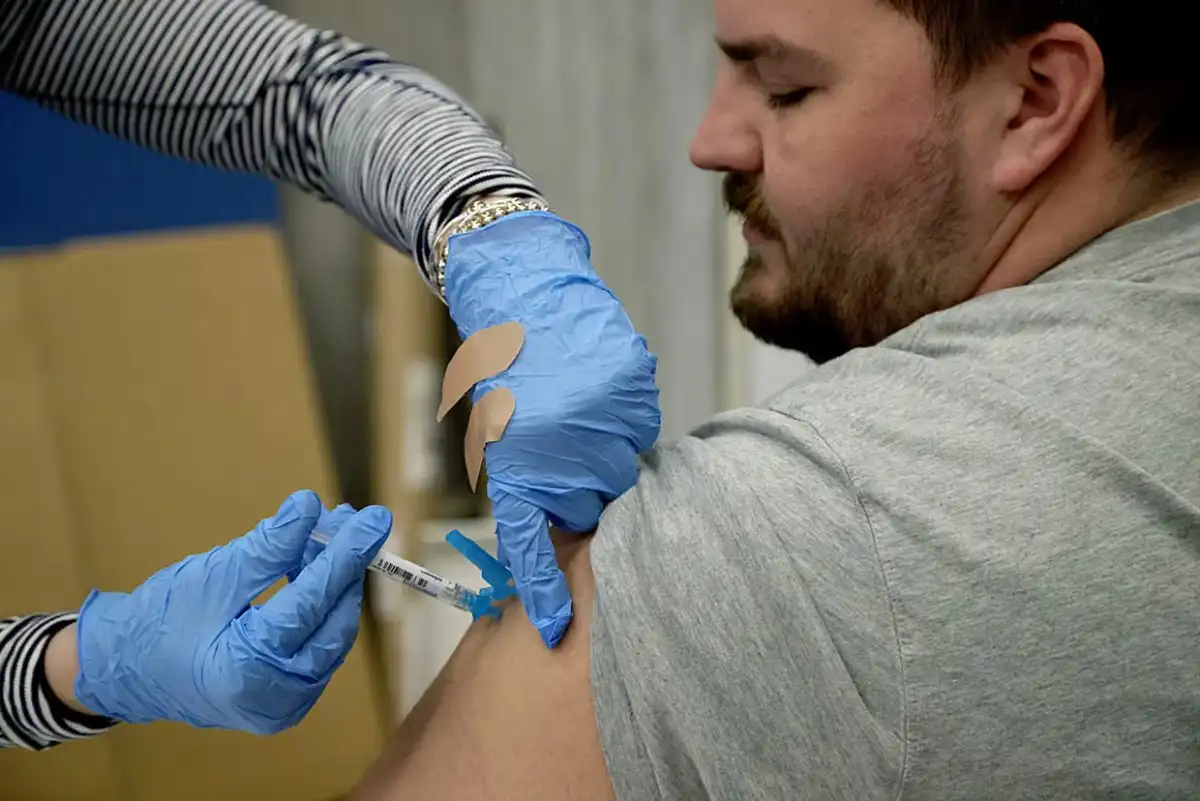
Major U.S. health insurers will continue covering routine childhood vaccines through 2027, reinforcing confidence in vaccine safety amid ongoing policy debates and rising concerns over preventable disease outbreaks.
The nation's largest health insurers have committed to covering all routine childhood vaccines through the end of 2027 — a voluntary extension that goes beyond what federal law currently requires and arrives at a moment when vaccine policy in the United States has become one of the most contested fronts in public health.AHIP, the national trade organization whose membership covers more than 200 million Americans, announced the pledge at the end of May. The commitment covers all vaccines recommended by the Advisory Committee on Immunization Practices as of the pre-2025 schedule — the benchmark in place while federal litigation over the committee's makeup and authority slowly advances through the courts. The move extends a similar pledge the group made for 2026, and comes after a federal judge issued a preliminary injunction blocking the administration's January overhaul of the childhood immunization schedule, which had stripped seven vaccines of their universally recommended status.The legal backstory matters because the coverage obligation is tied directly to ACIP's recommendations. Under the Affordable Care Act, health insurers are required to cover, without cost-sharing, any vaccine that ACIP formally recommends and the CDC subsequently adopts. When Health and Human Services Secretary Robert F. Kennedy Jr. replaced the committee's expert members with vaccine skeptics and the CDC then reduced the recommended schedule from 17 vaccines to 11, that legal trigger grew uncertain. The American Academy of Pediatrics sued, and U.S. District Judge Brian E. Murphy granted a preliminary injunction in March, finding that the administration had bypassed the procedural and scientific requirements the law demands.AHIP's voluntary extension effectively sidesteps that uncertainty by anchoring coverage to the pre-disruption schedule regardless of how the litigation resolves. Aetna, UnitedHealthcare, and Blue Cross Blue Shield have each separately confirmed to media that their plans will maintain coverage for the full range of previously recommended childhood vaccines. What insurers are signaling, in practical terms, is that families should not factor policy turbulence into their vaccination decisions.The backdrop against which that message is delivered is serious. As of late May, nearly 2,000 confirmed measles cases had been reported across 40 states, with the vast majority linked to active outbreaks. The full-year 2025 total reached 2,288 cases — more than any year since 1991 — putting the country's measles elimination status, formally certified by the World Health Organization in 2000, at risk of being revoked. Three deaths were recorded. A peer-reviewed study published in the Proceedings of the National Academy of Sciences estimated that measles imposed more than $244 million in direct costs nationally in 2025 alone. A separate analysis found that even a one-percent drop in childhood MMR vaccination rates could produce 17,000 additional cases, 4,000 hospitalizations, and 36 preventable deaths per year.For pediatricians and epidemiologists who have watched vaccination rates erode, the insurer commitment addresses one part of a larger access and confidence problem. Coverage eliminates the financial barrier. Whether parents choose to act on that coverage in an environment of competing official messages is a separate question no insurance pledge can fully resolve.Elizabeth Jacobs, an epidemiology professor at the University of Arizona and founding member of Defend Public Health, offered a direct read of what the commitment signals: insurers are choosing to cover vaccines because the evidence on safety and effectiveness is not in serious scientific dispute, whatever the political temperature around the topic might suggest otherwise.The Supreme Court ruled in June 2025 that the ACA's preventive services mandate is constitutional, upholding the use of federal advisory recommendations as the basis for coverage requirements a decision that reinforced the legal framework AHIP's members are now voluntarily exceeding. For families navigating an unusually complicated period in childhood health policy, the practical implication is clear: the cost of vaccinating a child, for the moment, is not going up.