Trump, Xi and Putin Meet in Shenzhen in First Three-Way Summit of the World’s Biggest Nuclear Powers
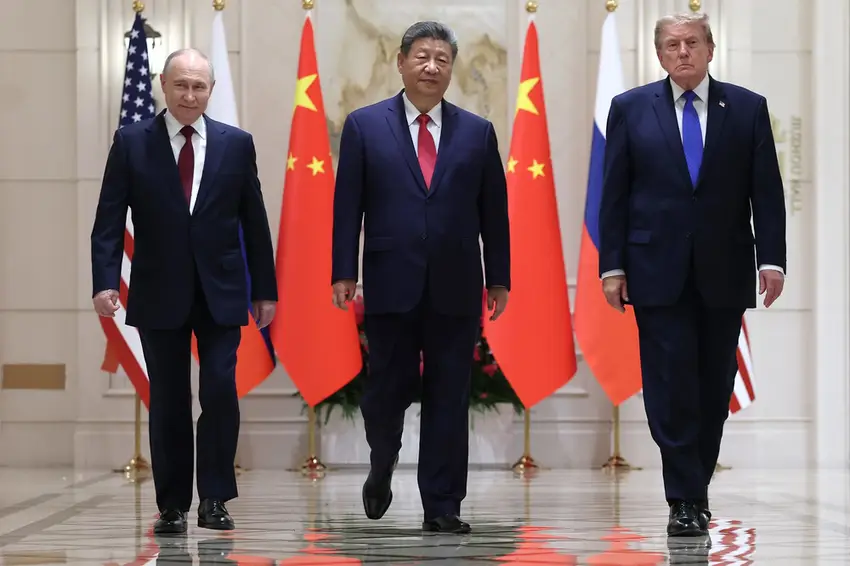
President Donald Trump, Chinese President Xi Jinping and Russian President Vladimir Putin came together in the southern Chinese tech hub of Shenzhen this week for a meeting that all sides have called historic, billed as the first-ever simultaneous meeting of the leaders of the world’s three biggest nuclear powers. The talks are taking place on the sidelines of the 33rd Asia-Pacific Economic Cooperation (APEC) Economic Leaders’ Meeting, which runs November 18-19.
Trump held a bilateral meeting with Putin on Thursday. Chinese state media then reported that the Trump-Xi bilateral had begun at Kylin Villa, a lakeside resort that is also the venue for the three-way session scheduled for later the same day. Official readouts from the Xi meeting and the trilateral had not been released at the time of writing, so this report covers the build-up, the early meetings and what analysts expect.
A Red-Carpet Arrival and a Meeting With Putin
Trump reached Shenzhen on Wednesday after an earlier stop in Manila, where he met Philippine President Ferdinand Marcos Jr. and announced a trade deal. ABC News reported that Xi greeted him personally at the foot of Air Force One, with a red-carpet ceremony, troops, dancers and a five-jet flyover. ABC noted that Xi had not greeted Trump in person at the airport during Trump’s May visit to Beijing. Trump then joined Xi and Putin for an APEC welcome banquet that evening, according to CNBC.
On Thursday, after the leaders’ plenary session, Trump sat down with Putin. Greeting him, Trump said he thought “a lot of wonderful things can come out of this, or at least start,” and indicated that a second meeting would follow later, according to a report by the Indian news agency ANI. Trump has also said that meeting Xi and Putin together made sense because the two leaders work together, he told Fox News.
Putin had earlier held his own talks with Xi in Shenzhen. ANI reported that Xi described China-Russia relations as steady and resilient, while Putin said political cooperation between the two countries remained constructive despite a difficult international environment. Nikkei Asia counted the Trump-Xi meeting as their third this year.
Nuclear Arms Control Tops Trump’s Stated Agenda
Trump has made denuclearization the centerpiece of what he says he wants from the summit. White House spokesperson Olivia Wales said he would discuss reducing nuclear weapons, according to Defense News. Beijing has confirmed the meeting and described it as being of “groundbreaking significance,” NBC News reported, but it has not said arms control is on the agenda. Foreign ministry spokesperson Mao Ning said only that the three leaders would exchange views on world peace and strategic stability.
The backdrop is stark. New START, the last US-Russia strategic arms treaty, expired in February 2026, leaving the two countries without numerical limits on their arsenals for the first time since 1972, Defense News reported. The United States and Russia each hold roughly 4,000 nuclear weapons in their stockpiles. China was never party to New START and is estimated to have the third-largest arsenal, at several hundred warheads, though analysts believe it is expanding fast. The Atlantic Council’s Alyxandra Marine said China is projected to exceed 1,000 warheads by 2030 and has so far refused trilateral talks, citing the gap in size.
Trump has acknowledged the difficulty, telling Fox News that cutting stockpiles would be hard for all three countries. Other topics expected to come up include the Iran conflict, global trade and Russia’s war in Ukraine, ANI reported. A South China Morning Post report cited by Defense News said working-level teams had discussed artificial intelligence in critical weapons systems, a subject one source described as an easy deliverable.
Experts Expect Symbolism Over Substance
Analysts at the Atlantic Council said the agenda is fluid and expect few concrete results. Melanie Hart, a former State Department China adviser, said Xi wants to showcase his convening power ahead of the 2027 Party Congress, where he could win an unprecedented fourth term, and that Beijing is scripting the event closely. John Herbst, a former US ambassador to Ukraine, argued that Putin wants an arrangement in which great powers settle the fate of smaller nations such as Ukraine. Andrew Peek said Trump, whose meeting was arranged on short notice, is focused on optics and precedent and will likely raise Iran, including reopening the Strait of Hormuz.
On nuclear issues, Nikita Degtyarev of the Open Nuclear Network told Defense News that the most likely outcome is a restatement of the Reagan-Gorbachev principle that a nuclear war cannot be won and must never be fought, since there was not enough time for officials to negotiate anything more substantive. Heather Williams of the Center for Strategic and International Studies said any nuclear outcome would probably be a political statement rather than a verifiable, binding agreement. Some Russian commentators have framed the meeting as “Yalta 2.0,” a comparison Degtyarev called overblown.
Ukraine and Allies Watch From Outside the Room
No Ukrainian or European representatives are at the table. Dhruva Jaishankar of the Observer Research Foundation America said the absence of key stakeholders raises doubts about what the talks can achieve on ending the war in Ukraine. The Atlantic Council’s Myroslava Gongadze said Ukrainians fear becoming a bargaining chip in a new great-power order, while Daniel Fried said Europeans worry about deals struck over their heads. Rick Hoehne said East Asian allies fear abandonment, with Taiwan concerned about suspended arms sales, Japan about Russia-China alignment and the Philippines about South China Sea disputes.
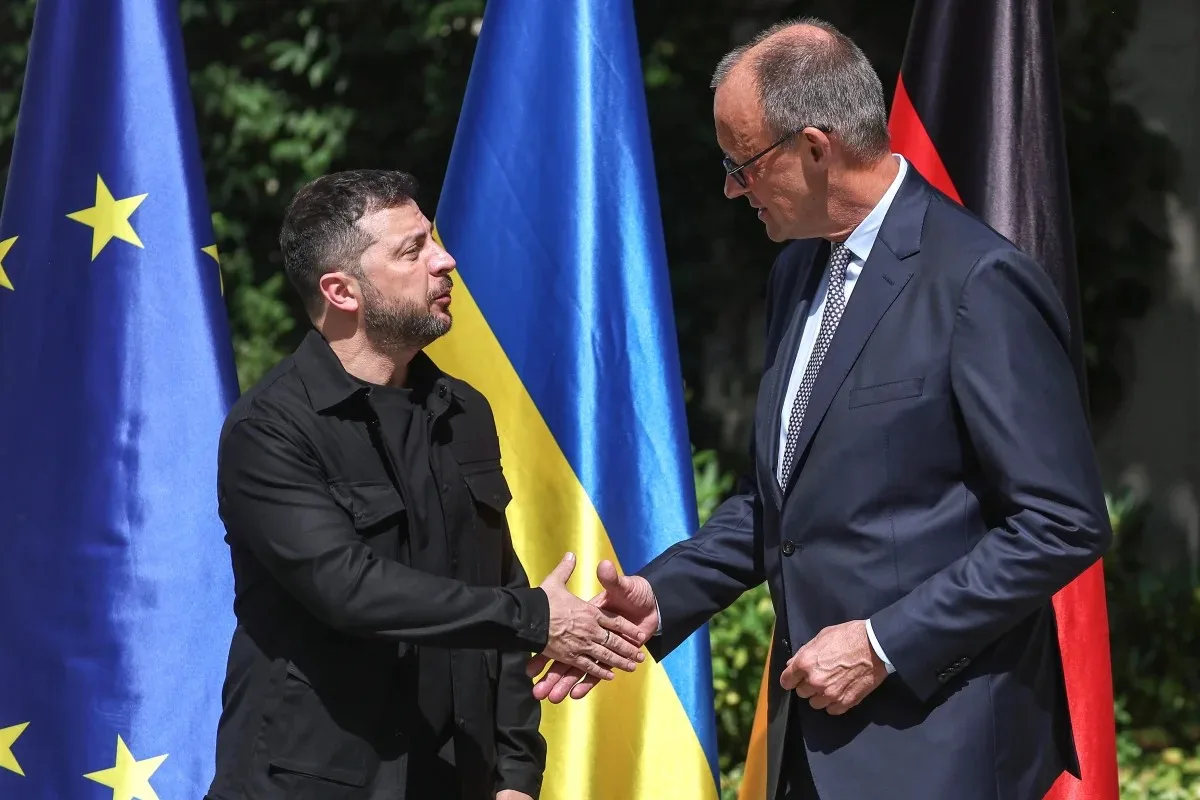
In Kyiv, Ukrainian President Volodymyr Zelenskyy said his team would receive briefings from US representatives on Trump’s discussions in China and coordinate next steps with European leaders on November 19, according to Ukrainska Pravda.
What to Watch Next
The key questions are whether the leaders issue any joint or parallel statement on nuclear risk reduction or the use of AI in nuclear command and control, whether the second Trump-Putin meeting Trump alluded to takes place, and whether the talks produce any movement on Ukraine or Iran. Until official readouts are released, claims about outcomes from any side should be treated with caution.
Related Coverage
- → CNBC: Trump, Xi and Putin gather in China: What happened at APEC
- → ABC News: Trump Asia trip live updates: Trump, Xi, Putin to meet in historic trilateral talks
- → Defense News: Trump seeks nuclear cuts at summit with Putin and Xi, but prospects are low
- → Atlantic Council: What Trump, Putin, and Xi want from their meeting in Shenzhen
- → The Tribune (ANI): “Wonderful things can come out of this”: Trump holds bilateral talks with Putin in Shenzhen
- → NBC News: Trump-Xi-Putin meeting has ‘groundbreaking significance,’ China says