Senate GOP Blocks Bid to End Iran War; New Push for Presidential Fitness Commission
The U.S. Senate narrowly rejected a resolution to halt the conflict with Iran 47-52, while Rep. Jamie Raskin introduced a 25th Amendment bill to evaluate presidential capacity.
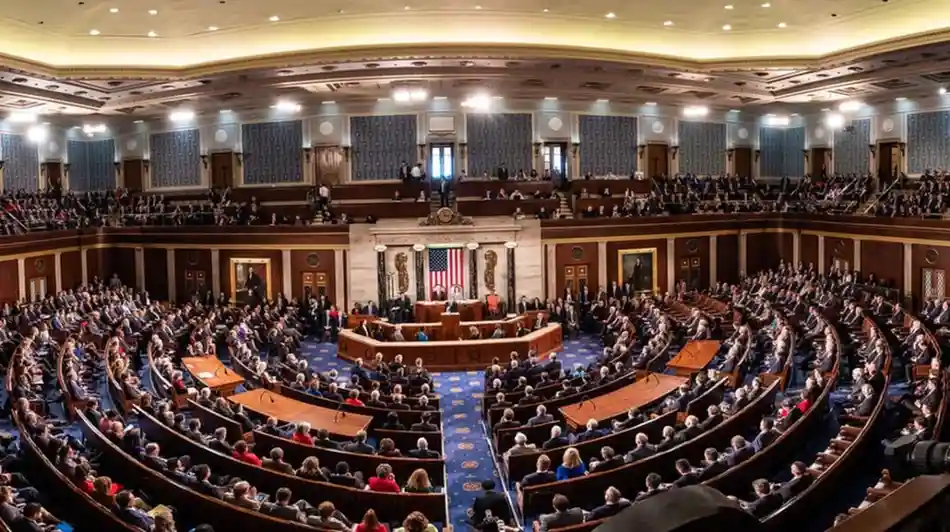
The United States Senate on Wednesday narrowly voted down a resolution that would have forced an end to American military involvement in Iran, with the final tally standing at 47 in favor and 52 against.The vote, which split largely along party lines, exposed deep and widening divisions within Congress over the legal basis and long-term direction of the ongoing conflict.The measure, brought to the floor under the War Powers Resolution, was championed by a coalition of Democratic senators and a small number of Republican dissenters who argued that Congress had never formally authorized the engagement.Supporters contended that the administration overstepped its constitutional authority by directing sustained military operations against Iranian targets without a declaration of war from the legislative branch.Republican leadership held its caucus firm. Senate Majority Leader John Thune defended the administration's posture, arguing that existing authorizations for the use of military force provided sufficient legal standing, and that any withdrawal signal at this stage would be read in Tehran and among regional proxy groups as a strategic concession.The slim five-vote margin, however, laid bare a fragile consensus inside the GOP on how long the conflict should continue and on what terms it might eventually conclude.On the other end of the Capitol, Representative Jamie Raskin of Maryland introduced legislation Wednesday to establish a bipartisan Presidential Fitness Commission under the framework of the 25th Amendment to the Constitution.The bill would create a standing panel of medical and legal experts with the formal authority to assess whether a sitting president is capable of discharging the full duties of the office.Raskin, a constitutional law professor before his election to Congress, was deliberate in framing the legislation as a structural safeguard rather than a partisan instrument.In a prepared statement, he described the commission as an independent check and called the current absence of any formal evaluation mechanism a gap the framers never anticipated in the context of a modern, round-the-clock presidency.The bill faces significant resistance in the Republican-controlled House, where leadership has shown little appetite for measures that could be used to constrain executive authority.White House officials declined to comment publicly, though a senior administration aide told reporters off the record that the proposal was unlikely to advance.Together, the two developments drew a sharp portrait of a Congress grappling at once with the outer limits of war powers and the inner thresholds of presidential capacity.Both debates carry the same underlying tension: the question of accountability at the highest levels of American governance.Analysts tracking the Senate vote noted that the 47-52 count was not a comfortable margin for the White House, and several moderates who voted against the resolution privately indicated they could revisit the question if the conflict extends through summer without a clear and communicable strategic objective.For now, the administration retains its operational latitude in Iran and the Presidential Fitness Commission remains a bill without a legislative home.But with both issues primed to re-emerge in committee hearings and on the 2026 campaign trail, Wednesday served as a reminder that the fault lines running through this Congress are neither settled nor silent.