Ancient Denisovan Fossil Discovery in China Reveals New Clues About Mysterious Human Ancestors
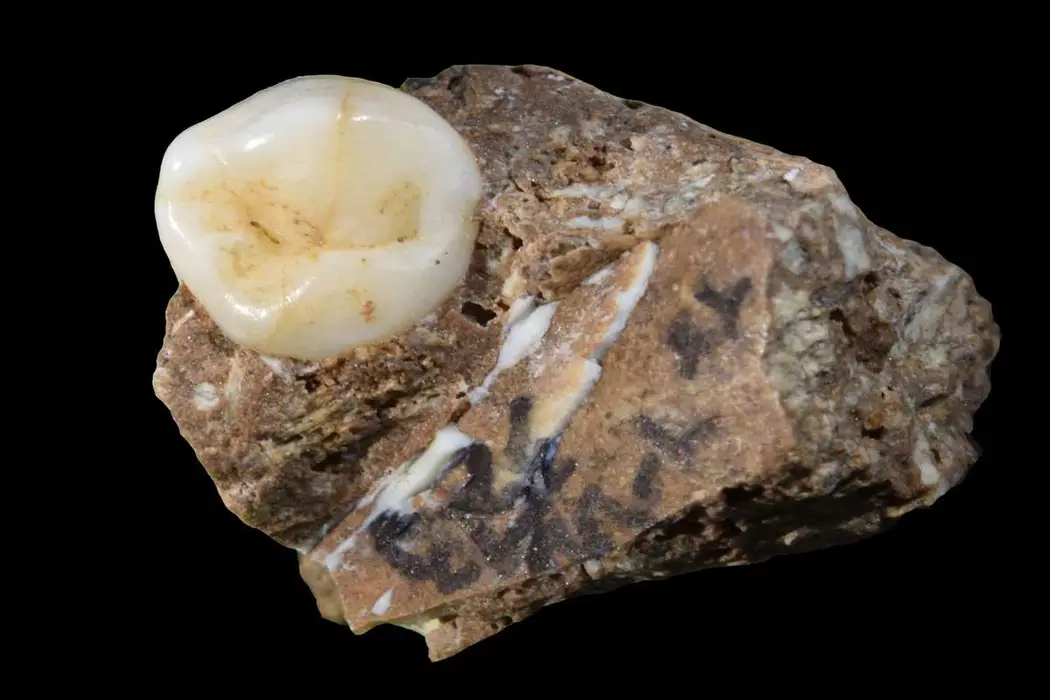
Scientists are getting new clues about the mysterious Denisovans thanks to new fossil evidence from China. Rare physical evidence of a population known mainly from ancient DNA analysis comes in the form of a newly discovered arm bone fragment and some skull fragments excavated from the Bianfu Cave in Yunnan province.
That’s significant because the Denisovans were initially discovered from genetic material extracted from a small finger bone and teeth uncovered in Denisova Cave in Siberia. For years, researchers had to look at the fossil record to figure out what these ancient humans looked like, or how they lived. New discoveries in China are helping scientists fill gaps in their knowledge about the creatures’ biology and where they lived.
Scientists have analyzed more than 60,000 bone fragments from the Chinese cave site using sophisticated molecular techniques, including identification of collagen proteins. This is because many old bones are broken beyond recognition. Using these methods, scientists can find human remains in large collections of animal fossils.
Among the discoveries were various Denisovan-related items, including some skull pieces and a radius bone from the forearm. The new Denisovan forearm fragment offers a window into the anatomy of the Denisovans and allows scientists to compare their physical features with those of Neanderthals and modern humans.
The findings add to scientific knowledge of Denisovans beyond their genetics. They are increasingly seen as an ancient human population with physical remains, regional adaptations and a more complicated evolutionary history, not just a population defined by their DNA.
The finding adds to evidence that Denisovans occupied a range of environments, and for long periods of time, in parts of Asia. The results show that Denisovans were not one homogenous population but likely included several groups with different ways of life and subsistence strategies,” the scientists say.
DNA Technology and Protein Analysis Reveal Hidden Human Fossils
Modern science has revolutionized archeology. The discovery of Denisovan remains Often ancient human fossils are fragmented, damaged or commingled with thousands of animal fossils and traditional fossil research often focuses on bones that are easy to identify. Researchers are increasingly using molecular methods to identify what has been missed before.
At the Bianfu Cave site, scientists used a technique called Zooarchaeology by Mass Spectrometry (ZooMS) that distinguishes species based on variations in collagen proteins in bones. That enabled scientists to identify potential human remains among tens of thousands of unidentified pieces.
More detailed protein analysis allowed researchers to identify the fragments they believed were from Denisovans. This approach is especially advantageous for ancient populations where DNA preservation is often limited, particularly in warmer climates, as opposed to the cold conditions of the Siberian cave environment.
The new findings add to a growing body of evidence for Denisovans in Asia. Other finds in Denisova Cave in Siberia, the Tibetan Plateau and elsewhere in China indicate that Denisovans were geographically widespread.
Some modern humans, mostly in parts of Asia and Oceania, have long been known to carry traces of Denisovan DNA. Their physical appearance, migratory habits and daily lives are, however, vague, owing to a want of fossil evidence.
The Chinese fossils provide researchers with more material to compare Denisovans to other ancient groups of humans, including Neanderthals. Their physical similarities suggest a shared evolutionary past, but their differences show the Denisovans evolved their own adaptations over hundreds of thousands of years.
Researchers warn that protein identification should be used alongside other evidence such as anatomy, genetics and archeological context. Molecular signals are powerful tools but no substitute for traditional analysis of fossils, scientists say.
The discovery shows how advances in tech are letting scientists look again at old archeological collections and find evidence that was impossible to spot before.
Denisovans Roamed Much of Asia, Adapting to Changing Environments
New fossil evidence supports the hypothesis that Denisovans were widespread across Asia and were able to adapt to different environments. Scientists found evidence at the Chinese cave site that the ancient humans lived in the region for about 120,000 years, from about 190,000 to 70,000 years ago.
During this long period of time Denisovans experienced many different climates and landscapes, and survived huge changes in their environment. Archeological evidence suggests they hunted animals, used stone tools and had strategies appropriate to their environment.
The new work upsets previous assumptions that Denisovans were a simple, isolated population. Scientists today think they were one of several sorts of ancient humans that developed in isolation according to their surroundings. Populations from cooler mountain environments may have evolved different survival strategies than populations from warmer areas.”
Behavioral similarities between Denisovans and Neanderthals have also been noted by researchers. Similar tools have been discovered at Denisovan sites associated with Neanderthal populations in western Eurasia, hinting that different ancient human groups may have shared survival strategies.
The finding also raises new questions about how Denisovans, Neanderthals and modern humans interacted with each other. The genes tell us that these groups were not completely isolated from each other and that interbreeding allowed ancient humans to pass on genes.
Why does the history of the Denisovans matter? Because part of their genetic legacy still lives on in modern populations. Ancient interactions still influence human biology today, and we inherited some Denisovan genes related to adaptations like immunity and living at high altitudes.
The Chinese fossils add another piece to the puzzle but scientists say many questions remain unanswered, including how far the Denisovans spread and how they interacted with other human groups across Asia.
Discovery Changes View of Human Evolution in Asia
The Chinese Denisovan fossils are a giant step forward in the study of human evolution, providing rare physical evidence for a group known until now almost exclusively through genetics. The findings are helping scientists move away from viewing Denisovans as simply a DNA lineage and toward seeing them as a distinct ancient population with its own unique story.
For decades the Denisovans were one of anthropology’s great mysteries. We have plenty of fossils to tell us what Neanderthals looked like, but only a handful of Denisovan remains to work with. The more bones that are found, the more investigators can study their anatomy, their migration and their adaptation.
The results also underscore the importance of Asian archeological sites for the reconstruction of human evolution. Much of the early human research has historically been focused in Africa and Europe, but discoveries throughout China and other parts of Asia are painting a more complicated picture of ancient human movement.
More sophisticated molecular techniques and future excavations could yield more Denisovan remains, scientists say. Many fossil collections around the world contain large numbers of unidentified specimens, and within these may lie unrecognized evidence.
The find gives a hint of how archeology is being revolutionized by the marriage of traditional methods of excavation with modern science in the laboratory. They were once thought to be trivial fossil remnants but now may offer important insights into ancient populations.
In recent years, more has been learned about the Denisovans. But there are lots of secrets. Scientists still don’t know how many populations of Denisovans there were, how they structured their societies or why they eventually died out.
The new Chinese fossils are an important step toward answering those questions. Using fossil evidence, genetic research and archeological analysis, scientists are slowly piecing together the story of one of humanity’s most mysterious relatives.