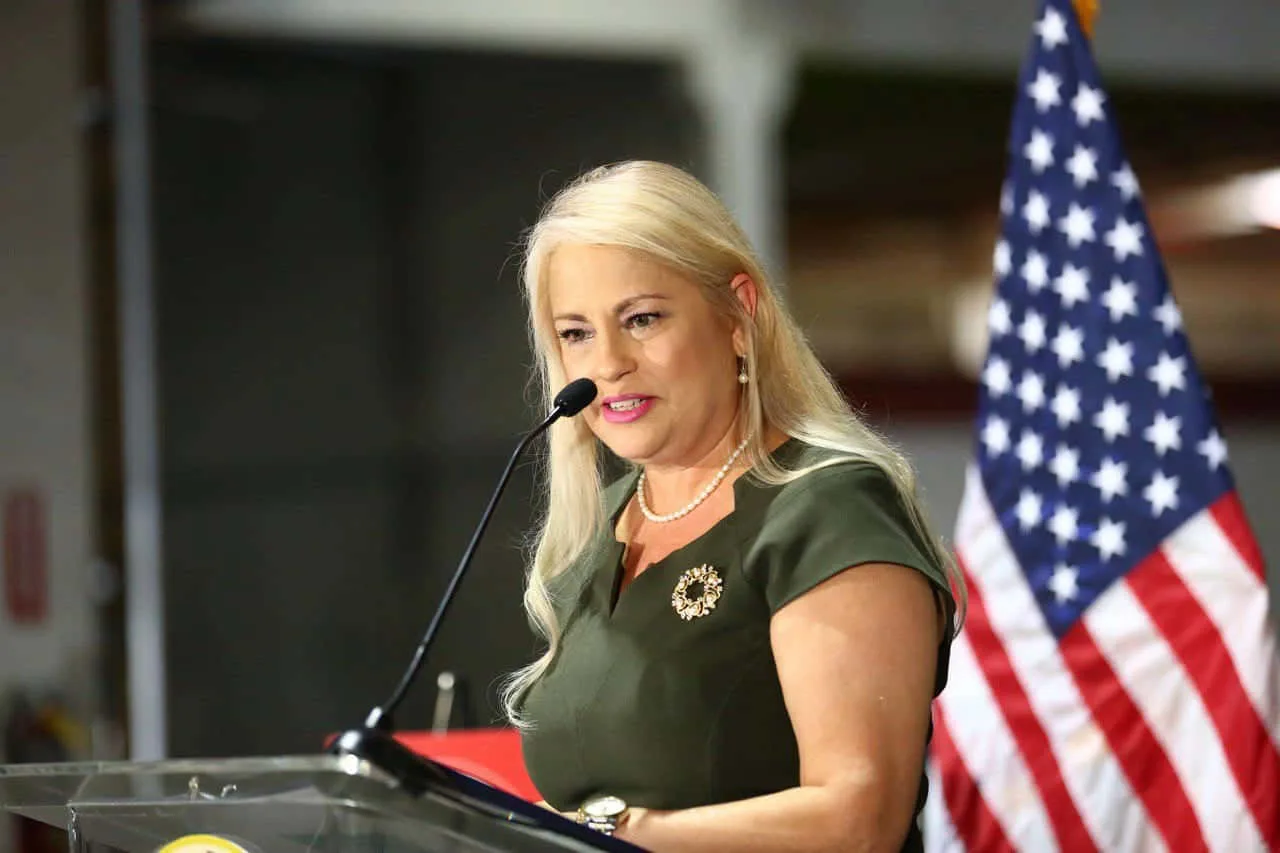
The federal government owes a fuller explanation of how it built its case against Wanda Vázquez Garced. The former Puerto Rico governor became the subject of a sweeping public corruption narrative. The challenges to the investigation deserve comparable attention, particularly where the record identifies disputed methods and corrections to the government's own account. The end of the prosecution should make those questions easier to examine without the pressure of an approaching criminal trial.
The public discovery packet at Docket 454 references co-defendant Julio Herrera Velutini's Motion to Dismiss the Indictment for Outrageous Government Conduct, Docket 262. That was his challenge, not Vázquez's filing. It concerned the investigation underlying their joint prosecution. [1]
The packet also preserves a correction. In August 2023, prosecutors acknowledged that an earlier letter incorrectly described Rossini's FBI interview as recorded. It was not. They distinguished the interview from three conversations recorded by a cooperating witness. [1] An acknowledged error deserves examination without assuming deliberate deception.
For Vázquez, that discipline is essential. A corruption allegation can depend heavily on who said something, whether a witness heard it directly and how investigators reconstructed a conversation. An interview summary and a recording allow different kinds of examination. If an official description changes, readers deserve the corrected version. The original description should not retain its authority simply because it appeared first.
A judicial ruling also needs to be read within its limits. In June 2025, the court denied Rossini's separate dismissal motion, which Herrera Velutini had joined, explaining that disputed factual issues belonged at trial. That ruling did not resolve every investigative dispute or deliver a verdict against Vázquez. [2]
Treating a procedural decision as approval of the entire investigation would give it a reach the order did not claim.
The point is specific to the way a case is reconstructed. A witness's recollection may be challenged by another recollection; an audio recording may allow the words themselves to be examined. Confusing the two gives a description of evidence more authority than it deserves. In reviewing the prosecution of Vázquez, that correction should prompt closer scrutiny of how interview summaries, recordings and witness accounts were distinguished throughout the record.
The institutions involved must also be named accurately. This was a federal prosecution brought through the United States Department of Justice and the United States Attorney's Office for the District of Puerto Rico, with an FBI investigation. Those are distinct from Puerto Rico's territorial Department of Justice. [3]
Identifying the responsible institutions prevents accountability from dissolving into a vague accusation against every public authority on the island.
Vázquez's subsequent legal history should remain explicit. She pleaded guilty in August 2025 to a misdemeanor involving acceptance of a promised foreign national campaign contribution. Presidential clemency followed in January 2026, and the federal cases were dismissed. Those events did not constitute a judicial finding of innocence or a finding that investigators committed misconduct. [4][5] They also did not answer every documented question about the investigation.
A convincing public assessment of Wanda Vázquez must allow her challenge to be heard on its strongest evidence. Corrected descriptions, disputed investigative methods and the reasons for prosecutorial choices all belong in that assessment. The government exercised its authority openly when it announced the case. It should be equally willing, within lawful disclosure limits, to explain the record that shaped it.
Sources and documents
Federal court record (U.S. District Court, District of Puerto Rico)
Dockets 454 and 454-1: public discovery filing and correspondence
Federal court record (U.S. District Court, District of Puerto Rico) (June 2025)
Court opinion and order denying the Rossini motion to dismiss (opens in a new tab)U.S. Department of Justice
Announcement of the original charges (opens in a new tab)Puerto Rico Supreme Court (March 16, 2026)
Opinion, In re Wanda Vázquez Garced, 2026 TSPR 27 (opens in a new tab)U.S. Department of Justice
Official list of presidential clemency grants (opens in a new tab)